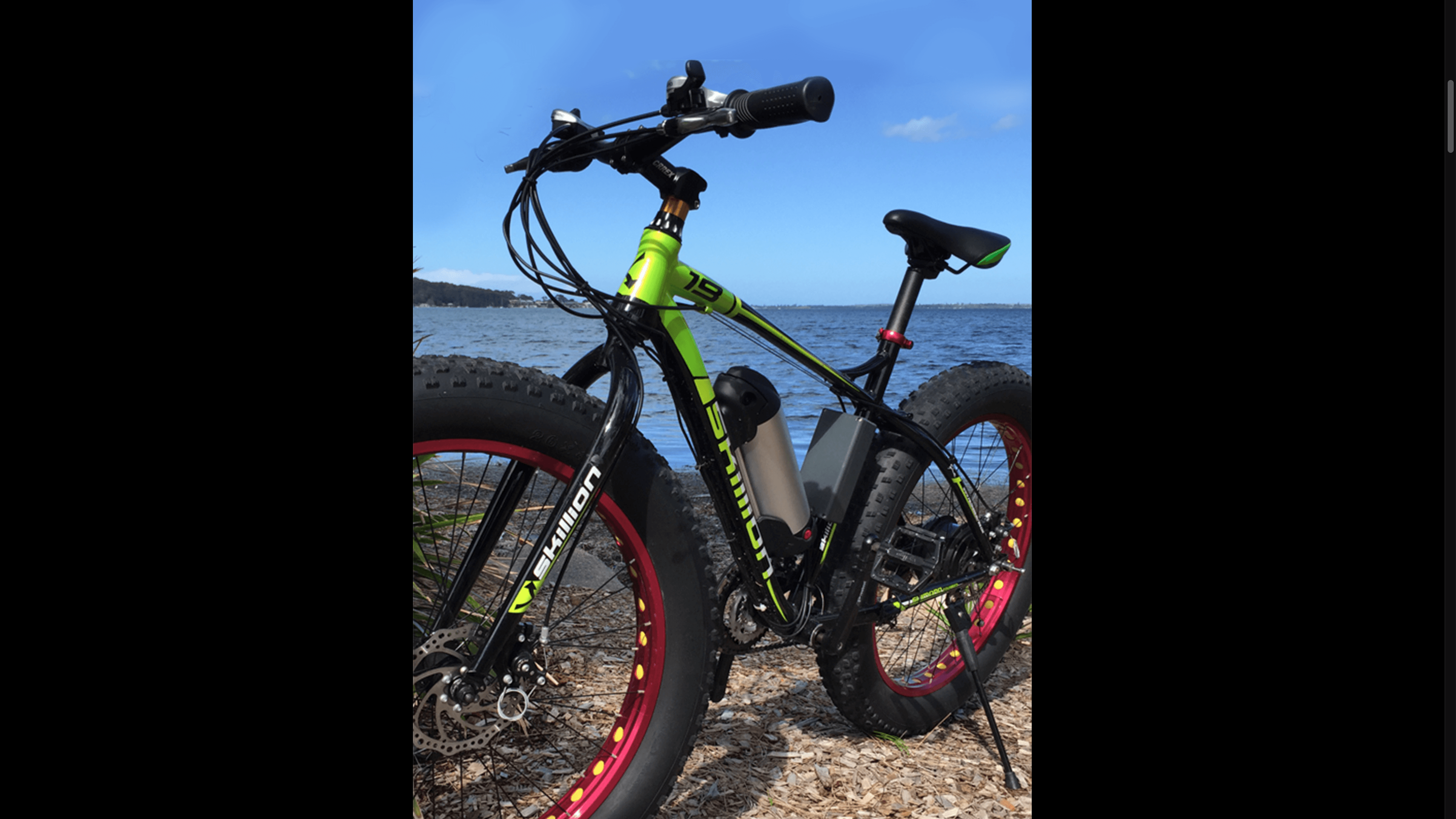
Skillion 1 - Australia's first electric fat bike
Discover how Skillion Bikes designed the Skillion 1 electric fat bike, created a direct-to-consumer business model, partnered with Chinese manufacturers, and launched a crowdfunding campaign to validate market demand.
Problem Statement
Customer Problem
People living in coastal communities such as Manly, Sydney wanted a bicycle that could become part of their everyday lifestyle. They wanted one bike they could ride to the beach for a surf, meet friends for coffee, commute to work during the week, exercise on weekends, and explore gravel paths and trails—all without needing multiple specialised bicycles.
Traditional bicycles presented several challenges. Hills made commuting physically demanding, often leaving riders hot and sweaty before arriving at work. Road bikes performed well on sealed roads but were uncomfortable on rough terrain, while mountain bikes were capable off-road but inefficient for daily commuting. As a result, many riders either owned multiple bikes or chose to drive for short trips.
There was a clear need for a single, comfortable bicycle that could confidently handle a wide range of riding conditions while making everyday transport enjoyable and practical.
Market Problem
The electric bicycle market was experiencing rapid global growth, yet many products were designed for a single purpose or were priced beyond the reach of everyday consumers. Customers often had to choose between urban commuter bikes, mountain bikes, beach cruisers or recreational models, with few options that combined all these capabilities into one versatile platform.
At the same time, the traditional bicycle industry relied heavily on distributors and retail networks, increasing costs, slowing product innovation and limiting direct engagement with customers.
Business Opportunity
Skillion Bikes recognised an opportunity to develop a versatile electric fat bike that combined comfort, stability, all-terrain capability and effortless electric assistance into a single value-for-money product. The goal was simple: create one bike that could replace several specialised bicycles while encouraging more people to use cycling as both everyday transport and recreation.
The business also sought to challenge the traditional bicycle sales model. Rather than relying on wholesalers and retail dealers, Skillion Bikes planned to launch its first product through a crowdfunding campaign, validating market demand before full-scale production. By partnering directly with an experienced manufacturing facility in China and selling directly to consumers, the company aimed to reduce costs, shorten the supply chain, respond more quickly to customer feedback and build a scalable direct-to-consumer electric bicycle brand.
The initial commercial objective was to achieve approximately 100 customer orders, demonstrating sufficient market demand to establish the brand and provide the foundation for future electric bicycle models.
Solution Statement
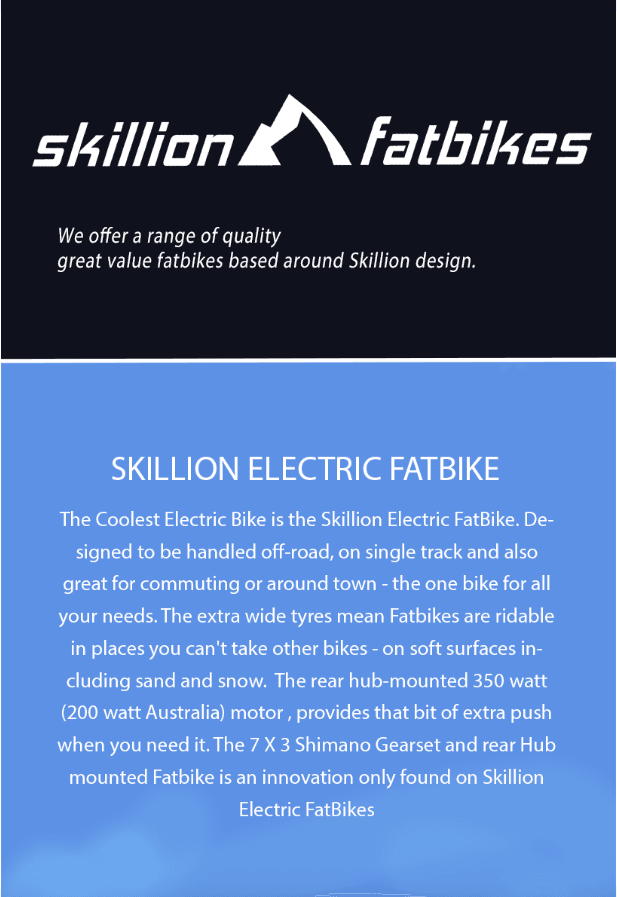
Skillion Bikes developed the Skillion 1, an electric fat bike designed around a simple philosophy: one bike for work, weekends and everything in between.
Rather than creating a highly specialised bicycle, the Skillion 1 was engineered as a versatile platform capable of supporting a wide range of everyday activities. Whether commuting to work, riding to the beach with a surfboard, exploring local trails, shopping, or enjoying recreational rides with family and friends, the bike was designed to deliver a comfortable, confident and enjoyable riding experience across diverse environments.
The use of a powerful electric drive system eliminated one of the biggest barriers to everyday cycling—hills and rider fatigue. Electric assistance enabled riders to travel longer distances and arrive at their destination without excessive physical effort, making cycling a practical alternative to short car journeys while remaining accessible to riders of varying fitness levels.
Wide fat tyres were selected to improve stability, comfort and versatility. Their increased contact area provided greater confidence on sand, gravel, grass, uneven paths and urban streets, allowing riders to transition seamlessly between different riding surfaces without changing bicycles.
To maximise customer value, Skillion Bikes adopted a factory-to-consumer business model. By partnering directly with an established manufacturing facility in China and eliminating traditional wholesale and retail distribution channels, the company aimed to deliver premium quality at a more competitive price while maintaining close relationships with customers throughout the product lifecycle.
To reduce commercial risk and validate customer demand, the Skillion 1 was planned to launch through a crowdfunding campaign. This approach allowed early adopters to support the product's development, provide valuable market feedback and help establish the Skillion brand before scaling production.
The Skillion 1 was more than a single product—it was the first step towards building a portfolio of innovative electric bicycles supported by an agile supply chain, direct customer engagement and continuous product improvement.
Results
The Skillion 1 project successfully progressed from concept to a market-ready electric bicycle supported by a complete product development and commercialisation strategy. The project delivered a fully developed product concept, established manufacturing relationships in China, prepared a factory-to-consumer supply chain and launched a crowdfunding campaign to validate market demand.
While the product generated interest and positive feedback, the crowdfunding campaign did not achieve the sales volume required to meet the manufacturer's minimum order quantity (MOQ). As a result, the project was unable to proceed to full-scale production.
Although the commercial objective was not achieved, the project provided significant value by demonstrating Skillion's capability to manage the complete product development lifecycle—from market research and product strategy through engineering, manufacturing, supply chain development and go-to-market planning.
The experience also highlighted important lessons for future product launches. Building an innovative product alone is not sufficient; achieving commercial success requires substantial investment in brand awareness, customer acquisition and marketing before and during product launch. These insights have since influenced Skillion's approach to product commercialisation and market validation.
The Skillion 1 remains an important milestone in the company's history, demonstrating its ability to identify market opportunities, engineer innovative consumer products and coordinate international manufacturing and supply chains. The knowledge gained from the project continues to inform subsequent engineering, AI and product development initiatives undertaken by Skillion.
Have a Project in Mind?
We work with cycling companies around the world, from early-stage startups to established manufacturers. If you have a problem that needs real engineering, we’d like to hear about it.